
In short
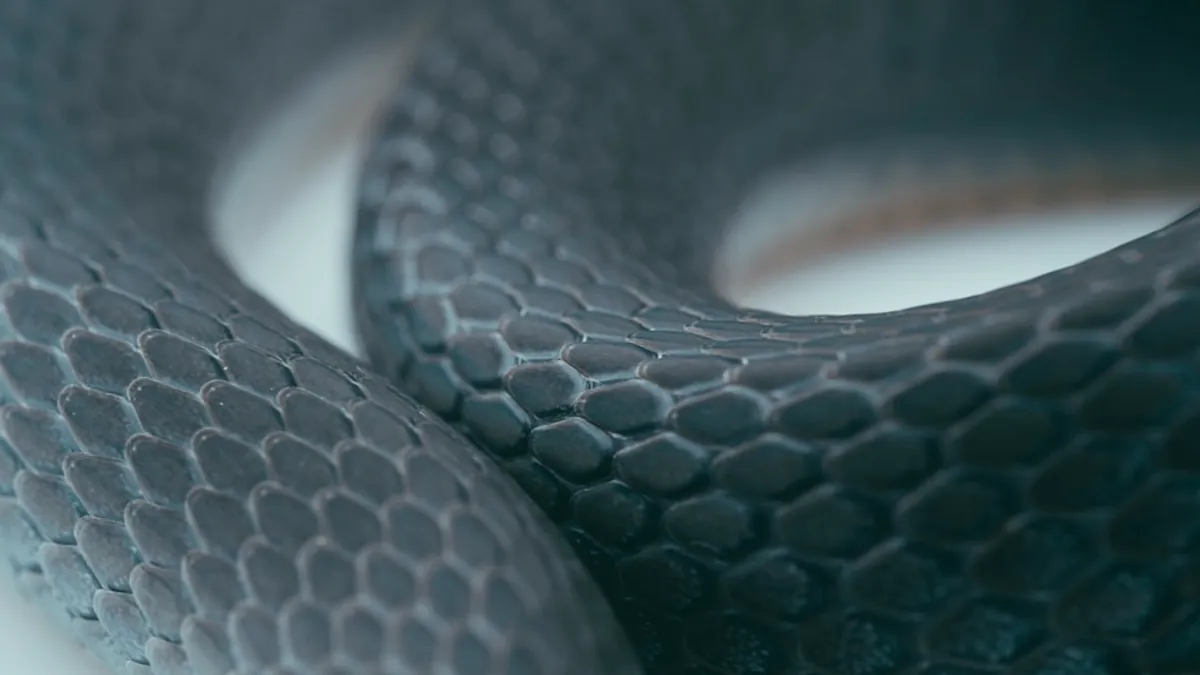
In Islamic dream interpretation, the snake represents the hidden enemy and stealth, according to Ibn Sirin and Al-Nabulsi. The reading skews cautionary; it can flip favourable under specific cues — killing the symbol, its flight from the dreamer, or a clean separation.
Qurʾanic & Hadith References
"Kill snakes, especially the one with two white lines on its back and the short-tailed one; for they blind the sight and cause miscarriage." (Bukhari & Muslim)
This hadith establishes the snake as an enemy to be guarded against — the foundation for interpreting it in dreams as the hidden adversary.
Symbolic Meaning
In dream symbolism the snake represents the hidden enemy and stealth; its movement and position decide the nature and measure of the lurking danger.
Interpretation by the Dreamer's Context
For a married person
According to Al-Nabulsi: A snake inside one's house signifies an enemy among the household or neighbours; its departure from the house signals the removal of harm.
Warning Signs
According to Ibn Sirin: A snake in a dream signifies an enemy whose strength matches the snake's. Killing it foretells victory over that enemy, and a snake that flees foretells deliverance from its harm.
How the Scholars Approached This Symbol
Ibn Sirin
Ibn Sirin's method links symbols first to the Qur'an, the Sunnah, and the Arabic language; then to proverbs and poetry; then to the dreamer's state. He delivers brief, source-anchored readings and insists that a dream varies from one person to another according to circumstance and time.
Al-Nabulsi
Al-Nābulsī combines Ibn Sirin's narrative method with the Ṣūfī method of ishārah (symbolic indication). He arranges symbols lexically, citing the views of earlier scholars before adding a Ṣūfī consideration or subtle note. He gives greater weight to the dreamer's state, intention, and the setting of the dream.
Practical Response — What to Do After Such a Dream
When a troubling dream of Snake occurs, the prophetic etiquette of the disliked dream applies:
- The first response to a disliked dream is to seek refuge in Allah from the accursed Satan. The Prophet ﷺ said: "If one of you sees what he dislikes, let him seek refuge in Allah from the evil of Satan." He should then spit lightly three times to his left.
- It is disliked to relate such a dream to anyone. The Prophet ﷺ said: "And let him not relate it to anyone." This guards the soul from misgivings and severs the dream's influence.
- It is recommended that the dreamer turn from the side on which he was lying, then stand and pray two rakʿahs, as narrated from the Prophet ﷺ — among the greatest means of repelling the harm of a dream.
- Remind the servant that a disliked dream is neither a decreed fate nor a binding ruling. It is a test for the heart and possibly a merciful warning. Reliance upon Allah and asking forgiveness deflect what is disliked, by His permission.
Frequently Asked Questions
What does Snake mean in a dream according to Islam?
In dream symbolism the snake represents the hidden enemy and stealth; its movement and position decide the nature and measure of the lurking danger.
What does Islamic tradition say about dreaming of Snake?
Ibn Sirin, Al-Nabulsi, and Ibn Shaheen interpret a dream of Snake within the Islamic tradition, anchored in the Qur'an, the Sunnah, and the dreamer's state.
Is dreaming of Snake a good or a bad sign?
The reading of Snake leans toward caution, with favourable readings in specific contexts.
Does the meaning of Snake change with the mood of the dream?
Yes — the reading shifts with the qualities of the dream: the symbol's condition, its colour, and its motion are all clues a competent interpreter uses.
How should one respond after dreaming of Snake?
The believer is encouraged after a dream to praise God if it was good, to seek refuge from its evil and tell no one if it was disliked, and to pray the istikhāra prayer when facing an important matter.
What does Snake mean in a dream For a married person?
A snake inside one's house signifies an enemy among the household or neighbours; its departure from the house signals the removal of harm.
Where can I find the original sources for the Snake interpretation?
The primary sources are: Muntakhab al-Kalām fī Tafsīr al-Aḥlām by Ibn Sirin, Taʿṭīr al-Anām fī Tafsīr al-Aḥlām by Al-Nabulsi, and al-Ishārāt fī ʿIlm al-ʿIbārāt by Ibn Shaheen. A complete bibliography appears in the "References & Sources" section at the foot of this page.
What are the warning signs of dreaming about Snake?
A snake in a dream signifies an enemy whose strength matches the snake's. Killing it foretells victory over that enemy, and a snake that flees foretells deliverance from its harm.
How do the scholars of Islamic dream interpretation interpret a dream about Snake?
This symbol is treated by Ibn Sirin and Al-Nabulsi, who set out its rulings and the gradations of its interpretation in the works cited in the References section at the foot of this page.
Is there a Qurʾanic or hadith reference for the interpretation of Snake?
Yes — Sahih al-Bukhari 3299; Sahih Muslim 2233: "Kill snakes, especially the one with two white lines on its back and the short-tailed one; for they blind the sight and cause miscarriage." (Bukhari & Muslim)
Dreams often seen together
Symbols frequently paired with Snake in the dream-interpretation literature. Open each symbol's own page for its standalone interpretation.
Related Dreams
 Black as a dream symbol
 Dream about Fear
 Seeing House in a dream
 Scorpion as a dream symbol
 Water
Water Seeing Cat in a dream
 Cow as a dream symbol
 Horse as a dream symbol
References & Sources
- Muḥammad ibn Sīrīn al-Baṣrī, Abū Bakr (33 AH / 654 CE — 110 AH / 728 CE, Basra). Muntakhab al-Kalām fī Tafsīr al-Aḥlām (Taʿṭīr al-Anām is also attributed to him).
Short biography & methodology
A noble tābiʿī and reliable scholar among the imams of Basra. He was raised in the household of Anas ibn Mālik, the Prophet's ﷺ servant, and took knowledge from a number of the Companions. Renowned for his scrupulousness and command of hadith, he became the reference point for dream interpretation in the Islamic tradition.
Ibn Sirin's method links symbols first to the Qur'an, the Sunnah, and the Arabic language; then to proverbs and poetry; then to the dreamer's state. He delivers brief, source-anchored readings and insists that a dream varies from one person to another according to circumstance and time.
- ʿAbd al-Ghanī ibn Ismāʿīl al-Nābulsī (1050 AH / 1641 CE — 1143 AH / 1731 CE, Damascus). Taʿṭīr al-Anām fī Tafsīr al-Aḥlām.
Short biography & methodology
A great Ṣūfī scholar and Ḥanafī jurist, one of the foremost figures of Damascus in the 11th century AH. He combined jurisprudence, Sufism, and the literary sciences and authored some two hundred works. His book on dream interpretation is an encyclopaedic reference that collects the citations of his predecessors and adds his own Ṣūfī insights.
Al-Nābulsī combines Ibn Sirin's narrative method with the Ṣūfī method of ishārah (symbolic indication). He arranges symbols lexically, citing the views of earlier scholars before adding a Ṣūfī consideration or subtle note. He gives greater weight to the dreamer's state, intention, and the setting of the dream.
Last reviewed: — editorial review against the primary sources of Ibn Sirin, Al-Nabulsi, and Ibn Shaheen.